

The popular Seresto flea and tick collar will remain on the market, but with new mitigation measures, the U.S. Environmental Protection Agency announced on Thursday.
The EPA announced the measures on the collar after a multi-year analysis of the product’s safety. The agency limited the approval of the collar to five years and required Elanco — the manufacturer of Seresto — to conduct enhanced reporting for adverse events, conduct additional outreach to the veterinary community, and put new warnings on the collar’s label, among other changes.
Elanco — which bought the entire Bayer Animal Health unit, including Seresto, from the German pharmaceutical giant in 2020 for $7.6 billion — praised the announcement.
“Adverse events reports are simply reports that must be investigated and do not indicate causation. We believe today’s decision by the EPA further reinforces that,” said Colleen Dekker, an Elanco spokeswoman in an email. “We greatly appreciate the EPA’s diligence in this comprehensive review, including the consultation with FDA, along with the many veterinarians and experts that have weighed in with their experiences and support of the product."
The EPA launched the review in April 2021, just one month after reporting by Investigate Midwest and USA TODAY showed that Seresto has been the subject of more complaints about pet harm and deaths than any other product in EPA history.
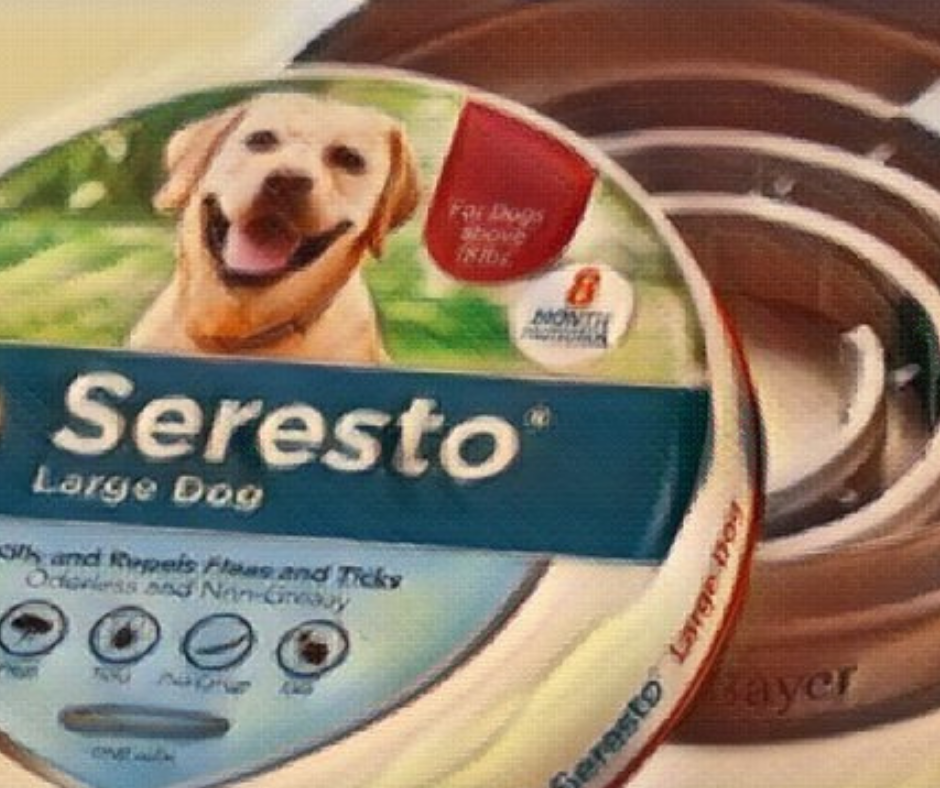
“EPA’s scientific review of Seresto-related incident reports identified the need for more detailed incident reporting and public outreach,” the agency said in a press release.
The EPA, which worked with the Food and Drug Administration to conduct the analysis, said that they were unable to get enough information from data that Elanco submitted to determine whether Seresto played a role in most death reports. Earlier this year, the agencies proposed transferring all regulation of pet pesticide products to the FDA.
“During the review of the reported cases of potential deaths associated with the collar the agency found that critical details of incidents were often missing from case narratives, often preventing the agency from determining the cause of the incident,” the press release said.
The full mitigation measures include:
- A time-limited registration of five years that will expire on July 13, 2028. Elanco must apply for continued use at least a year before that date. Normally, pesticides have a 15-year approval by EPA.
- Elanco must submit enhanced incident reports and sales information annually.
- Elanco must submit an annual report, similar to an FDA Annual Periodic Drug Experience Report, that will provide an update on stewardship efforts and analyze safety information collected about Seresto.
- Elanco must develop training materials for adverse effects and report on these efforts in July 2024.
- Elanco must develop and implement an outreach initiative to the veterinary community to inform them about risks and benefits associated with use of pesticides in pet products and the importance of reporting adverse effects. Elanco must report on these efforts in July 2024.
- Elanco must review the release mechanism of the collar to assess the risk of strangulation.
- The EPA split Seresto into two registrations, one for cats and another for dogs, to help make a comparison of incident data easier.
- Elanco must also add label warnings that show common adverse effects and instructions to remove the collar if effects occur. These include skin issues, as well as behavioral and neurological issues. The label will now tell consumers to remove the collar if those symptoms occur and to report them to EPA.
Elanco agreed to the changes prior to the EPA making the announcement on Thursday.
In a press release, Elanco described the steps as a “stewardship program” and encouraged the EPA “to implement these measures as a new EPA standard across all flea and tick collars to ensure consistent expectations for reporting across the category.” The release, also released Thursday, quoted veterinarians who praised the decision as well.
“We appreciate EPA’s diligence during this data-driven review process, resulting in a clear outcome and continued product availability to protect pets and human health,” said Dr. Ellen de Brabander, executive vice president of innovation and regulatory affairs at Elanco, in the press release. “We stand behind more than a decade of science-based data, analysis and monitoring which affirms the safety profile of Seresto.”

Lori Ann Burd, director of the Center for Biological Diversity’s environmental health program, said the EPA denying the nonprofit’s petition to cancel Seresto was disappointing, but said she was heartened that the EPA took some action.
“I think EPA would not have taken these measures if this product was as safe as has been claimed by the registrant. Actions like limiting the registration to five years and splitting it between dogs and cats are important steps toward protecting people and their pets from Seresto collars,” Burd said in an interview with Investigate Midwest. “Elanco had to agree to this. That’s a big deal.”
The EPA’s scientific analysis looked at Seresto incident reports and also compared those to other products from Elanco.
The analysis found that the most reported adverse effect for dogs was pruritus (itchy skin) and that was reported in 54% of the incident cases of the 49,000 the EPA reviewed. This was followed by lethargy and anorexia, each of which was reported in approximately 10% of cases.
For cats, application site hair change was most commonly reported in 32% of the 16,000 cases it reviewed, followed by lesions and pruritus, each of which was reported in approximately 25% of cases.
“More severe clinical signs (for example, convulsions) were reported much less frequently and appeared to be similar across the three Elanco products that were compared,” the analysis found.
On pet deaths, the EPA said in its analysis it needed more information than was collected in most instances.
“Where sufficient details were provided, there were no cases where high confidence existed in a correlation between the collar use and the death, often due to confounding factors such as concurrent medical conditions. In addition, the rate of deaths reported, based on the comparative statistical analyses performed, was similar between Seresto and other available pet products,” the analysis said.