
Midwest oat growers want a renaissance, but it will be hard without Big Ag
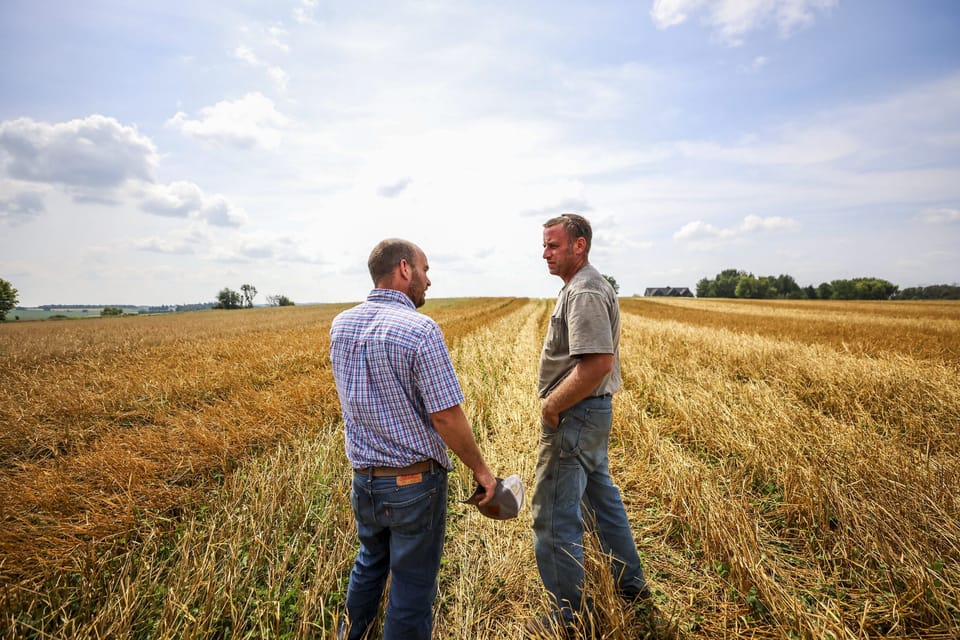
Iowa and Minnesota farmers are investing in new oat mill and pushing Quaker and General Mills to check out their product.
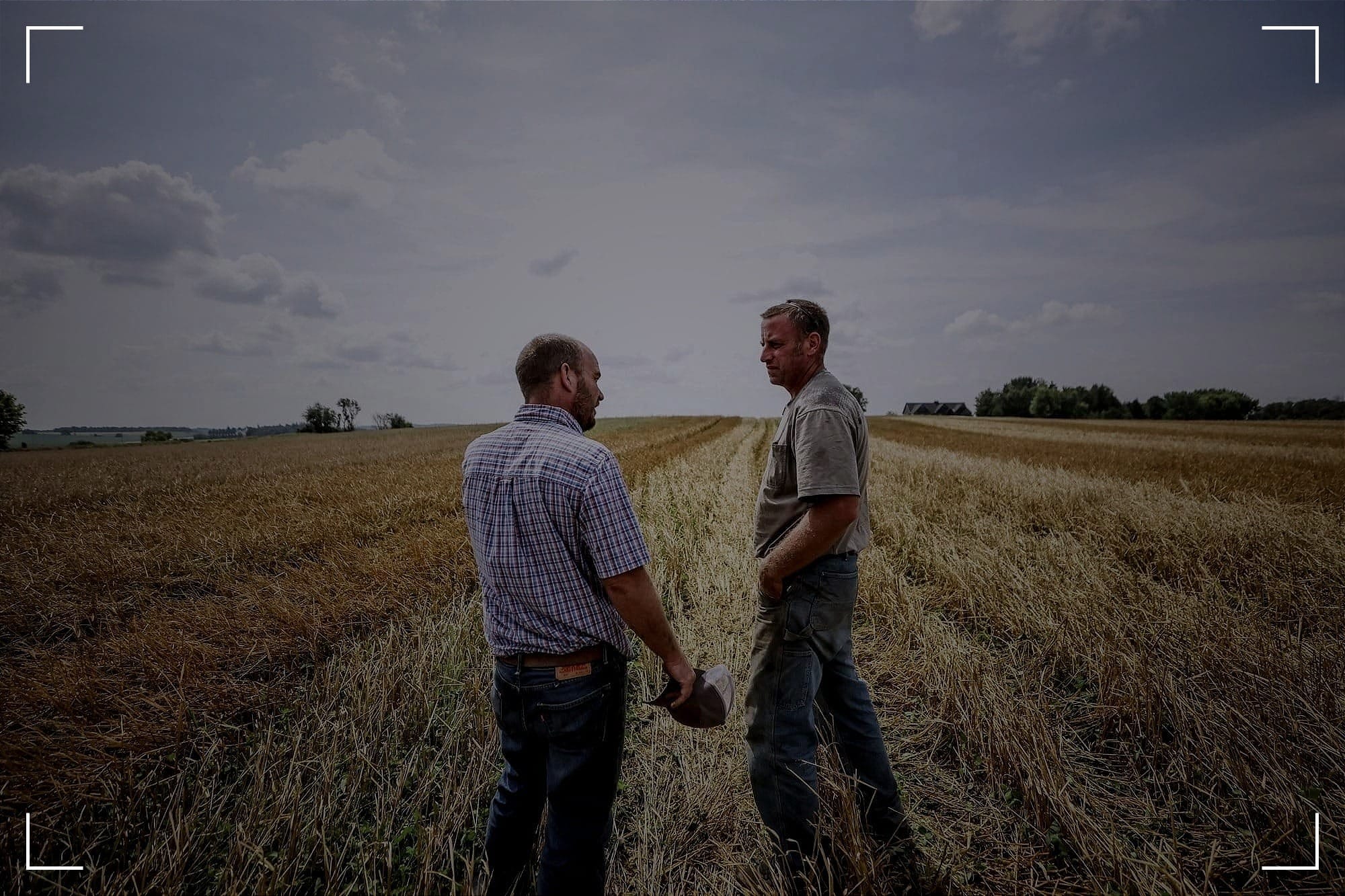
Midwest oat growers want a renaissance, but it will be hard without Big Ag
Iowa and Minnesota farmers are investing in new oat mill and pushing Quaker and General Mills to check out their product.
Note: This story has been updated to reflect that Practical Farmers of Iowa is based in Ames, Iowa — not Des Moines. Investigate Midwest regrets the error.
CEDAR RAPIDS, Iowa – Few people outside Quaker Oats know exactly what the Cedar Rapids factory is making when a sweet, wholesome smell wafts from the plant north of downtown.
Locals call it a Crunch Berry day because Quaker – the world’s largest cereal plant – makes Cap’n Crunch’s Crunch Berries, but the aroma could also be oats roasting for Oatmeal Squares or maple-flavored instant oatmeal.
The oats fueling that sweet-smelling goodness come not from the rich Iowa soil near the plant, but from up to 1,000 miles away in Canada. For decades, the plumpest, most consistent oats came from the northern plains, but new field trials show food-grade oats can be grown in Iowa and Minnesota by farmers eager for an alternative to corn and soybeans.
Buying domestic oats would help Quaker save freight costs and avoid threatened tariffs on Canadian goods. It could also improve Midwest water quality and soil health ravaged by an endless corn/soy rotation. Expanding Midwest oat production offers economic and environmental benefits for farmers and local communities, advocates say.

But agricultural companies and commodity groups don’t have financial incentives tied to oats because oats don’t require hybrid seeds, crop insurance or as much fertilizer. These big players aren’t opposing oats, but they aren’t cheerleading either.
The lack of support has left oat growers to be their own hype machines.
“We can actually pick our varieties and our production practices to provide a better product than Canada, not only on a protein level, but on an environmental impact level,” said Landon Plagge, a Latimer, Iowa, farmer and oat advocate.
In May, Plagge and other oat farmers in Iowa and Minnesota loaded 100,000 bushels of their oats into a rail car bound for Quaker’s factory in Cedar Rapids. Three months later, they’re still waiting to hear what the grain giant thought of the domestic product.
Iowa is a ‘donut hole’ for oat research
Baby boomers who grew up on Iowa farms remember growing oats to feed horses and other livestock. Iowans harvested more than 6 million acres of oats a year until the 1950s, according to Matt Liebman, an emeritus Iowa State University agronomy professor.
But as Americans started eating more meat, demand increased for corn to feed the cattle, hogs and chickens. When ethanol was approved as a fuel additive in the 1970s, corn demand rose again. Now, about 45% of corn nationwide becomes ethanol.
 Lauren Cross, Investigate Midwest
 Lauren Cross, Investigate Midwest
 Shannon Kelleher, The New Lede
Like kernels around a cob, industries popped up to serve King Corn. Specialty seed breeders, co-ops that sell fertilizer and consultants who tell farmers how much corn to feed their hogs all benefit from expansion of corn acres.
Still, Iowans harvested nearly 40,000 acres of oats for grain in 2022, putting it eighth in the nation behind North Dakota, Minnesota, South Dakota, Wisconsin, Texas, Pennsylvania and New York, according to the Census of Agriculture. Oats harvested to feed animals and humans increased 12.6% in Iowa between 2017 and 2022.
Iowa State University, a land-grant school with a powerhouse agriculture college, once had a distinguished oat breeding program. Kenneth Frey and J. Artie Browning developed a crown rust-resistant oat cultivar they shared with farmers as certified seed in 1968, according to the Agronomy Department’s 125th Points of Pride.
But Iowa State hasn’t had an oat breeder since 2007 and doesn’t do its own oat trials. The university did partner with Practical Farmers of Iowa, a sustainable agriculture nonprofit based in Ames*, to hold oat trials at four ISU research farms.
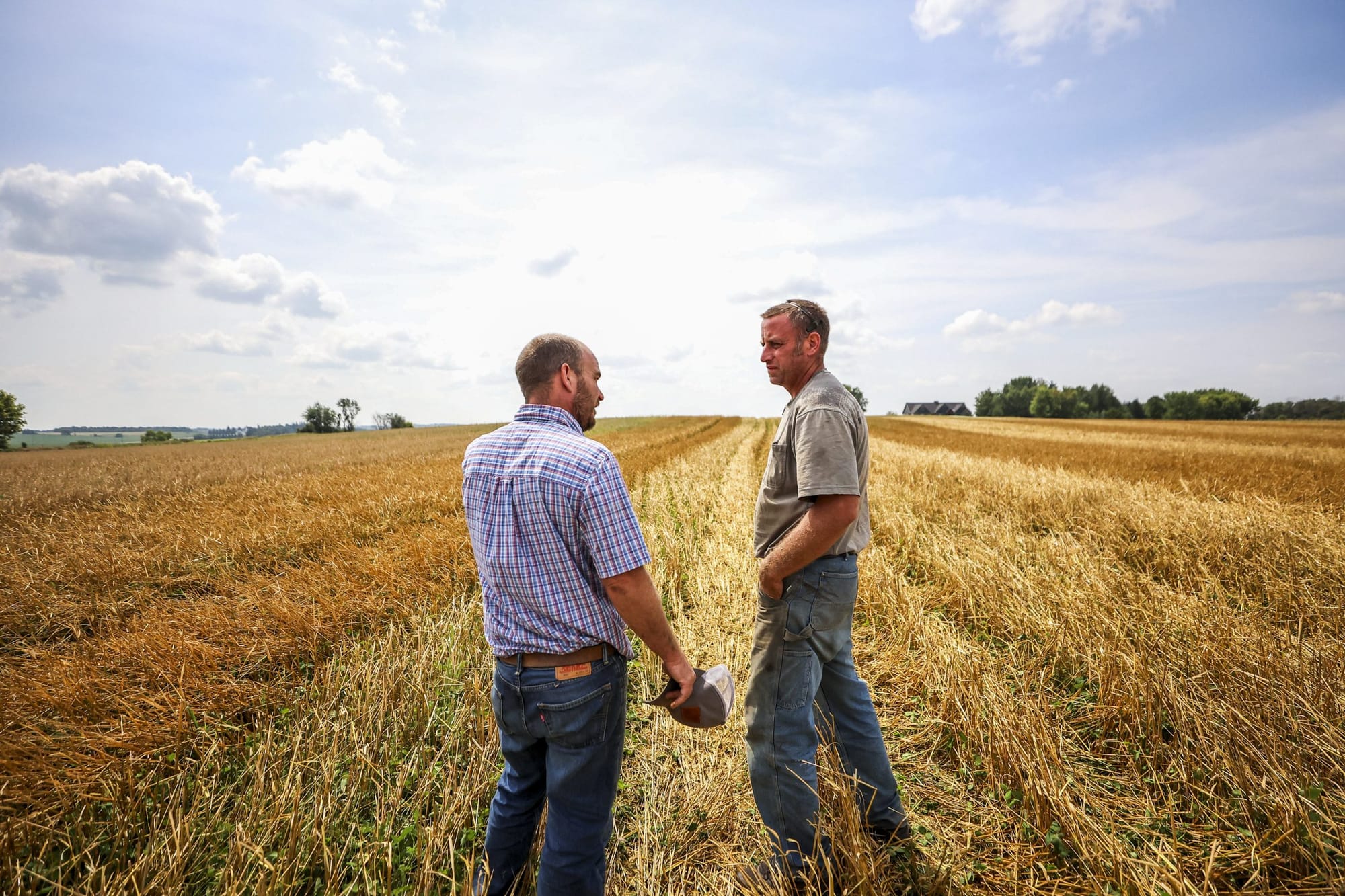
“Iowa is the donut hole,” Liebman said, referring to oat research in neighboring states of Minnesota, South Dakota, Wisconsin and Illinois.
Liebman, who retired in 2021, understands university budgets are tight and there’s no corporate constituency clamoring for oat research.
“There’s more money to be made in selling corn and soybeans,” he said, referring to ag companies. “With oats, you don’t have to keep buying seed every year because it’s not hybrid and it’s not transgenic. It’s much less lucrative.”
He’d like to see ISU prioritize research of oats and other small grains because of the benefits to soil health and water quality.
Glen Ritchie, who started as ISU’s Agronomy Department chair in July, said he knows there is renewed interest in oats among Iowa farmers and that might affect research priorities.
“We’re always looking for opportunities to provide the best value we can to the agricultural community in Iowa,” he said. “Oats are part of the discussions we’re having on that.”

He’s seen it happen
Martin Larsen dipped his toe into small-grains farming in 2018, planting oats on a small swath of his farm near Byron, Minnesota. He was curious. Would his combine work for oat harvest? Could he get at least 38 pounds per bushel – the minimum threshold for food-grade oats?
The answers were yes and yes.
“I ramped up from there to the point I have a full three-crop rotation on 1,400 acres,” he said.
Larsen has even invested in specialized equipment, including a header for his combine that strips the seeds from the top of the oat plant rather than running the whole stalk through the machine. This speeds harvest and keeps the stalk in place to reduce erosion.
Other farmers want to know whether Larsen is making money from oats.
“It’s always the thing we hear,” he said. “Soybeans, especially, can see an up to 10% yield bump because you’ve broken up the crop rotation.”
Glyphosate-resistant water hemp vexes every Midwest corn farmer. When the weed wants to make its move in late spring, oats already have a lush green cover and the water hemp can’t compete. That means less weed pressure during the next corn round and less pesticide he has to apply, Larsen said.
By planting red clover with the oats, the clover provides nitrogen to the soil, which feeds future corn crops with reduced fertilizer costs, he said.
“So you really start to put all this together and it’s looking like the right thing for my farm,” he said.
It’s also the right thing for protecting water quality, said Larsen, who is a conservation and feed lot technician for the Olmsted County Soil and Water Conservation District. The U.S. Environmental Protection Agency has asked Minnesota to develop a plan for reducing nitrate pollution to groundwater in southeastern Minnesota’s Driftless region.
Nitrate in drinking water not only can cause blue baby syndrome, but studies – including some done in Iowa – show a link between ingesting nitrate from drinking water and cancers including colorectal, thyroid, bladder and ovarian.
“We have to raise something different than corn and soybeans or raise corn and soybeans differently if we’re going to affect nitrates,” Larsen said. “We have hundreds and hundreds of data points of groundwater samples below oats compared to corn and soybeans, and it's black and white that oats will reduce nitrates in groundwater.”
Tests of groundwater under Larsen’s oat acres show up to 60% less nitrate than under corn acres.

Farmers band together
While running a grocery store in Latimer for eight years, Anne and Landon Plagge were always thinking about what customers wanted to buy.
“We were on vacation in Europe and we saw the proliferation of oat products on the shelves there,” Landon Plagge said. “Our (U.S.) consumer patterns tend to mirror that.”
The global market for oat milk was valued at more than $2 billion in 2020 and is projected to climb through at least 2028, especially with new shelf-stable milk. Beyond oat milk, there is oat flour for people trying to avoid gluten, and oatmeal boosted with flax and chia for people trying to get more protein.
Plagge decided he wanted to grow oats for the segment of the U.S. population that wants an allergen-free, pesticide-free product. Grain Millers processes oats in St. Ansgar, Iowa, near the Minnesota border, but they grind wheat and barley, too, so the oats can’t be completely free of allergens, Plagge said.
He recruited about 70 farmers, mostly from Iowa and Minnesota, to invest in Green Acres Milling, a $55 million oat-processing plant in Albert Lea, Minnesota. The plant, scheduled to open next year, eventually will process 3 million bushels of oats a year. This equates to about 60,000 acres of oats within three years, Plagge said.
“They put their own cash into making the mill a reality,” Plagge said of the investors – including Larsen – who will get a premium price for the oats they sell to Green Acres. The mill requires oat growers to use a cover crop and to grow oats as part of a rotation with other crops.
“That gives us the control of the raw materials supply coming in so we can provide a sustainably-produced oat with a cover crop for our brands and a diverse rotation for our brands,” Plagge said.

Who’s buying?
While Quaker is several generations removed from its 1870’s origin in Ravenna, Ohio, Seven Sundays founders Hannah and Brady Barnstable sold their first bag of muesli – like granola, but healthier – at a Minneapolis farmers market in 2011.
“We love oats,” Brady Barnstable said. “We think they are a huge unlock to change the agricultural landscape in the Midwest.”
Seven Sundays makes cereal and granola without dyes, artificial colors, allergens or refined sugars. They also buy only non-GMO crops grown without glyphosate. Their products, like Wildberry Protein Oats, have muscled their way onto grocery shelves, including at Midwest Costco stores.
“We’ve been invited to the Costco Midwest managers meetings in the Chicago area to give presentations on what we’re doing in our supply chain to benefit soil health,” Barnstable said. But Costco wouldn’t stock Seven Sundays just for environmental brownie points, he said. “The decisions are driven by sales. Is it resonating with their shoppers? For Seven Sundays, it is.”
Seven Sundays originally bought all its oats from Whole Grain Milling, in Welcome, Minnesota, but as they sold more muesli and cereal, Seven Sundays needed more suppliers, including some from Canada. By purchasing American oats, the company could avoid increased freight costs and skip tariff fears.
“Our goal is to source as close to home as possible for all our ingredients,” Barnstable said. “I have heard that this new mill will have the capacity to provide us and many other customers with the oats we need to fill our full demand.”

Public push for sustainable products
But what about Quaker? The company and its parent, PepsiCo Inc., did not respond to several attempts to seek comment for this story. Just like Quaker doesn’t advertise what makes that sweet smell in Cedar Rapids, the firm isn’t saying exactly what factors into their oat sourcing.
But we know price and availability of supplies are key drivers, according to PepsiCo’s 2024 Annual Report.
“Risk to our supply of certain raw materials is mitigated through purchases from multiple geographies and suppliers,” the report stated.
Companies face pressure from consumers – particularly Millennials and Gen Z – who increasingly want to buy products that are good for people and the planet. A 2024 survey by PwC showed consumers are willing to spend almost 10% more for sustainably-sourced or produced goods.
PepsiCo and Cargill announced in July they will partner with Practical Farmers of Iowa to advance regenerative farming practices across 240,000 acres in Iowa. Farmers who sell their corn to Cargill – which produces ingredients for PepsiCo’s family of companies – will have access to advice, technical resources and incentive payments to “support their transition to regenerative practices,” the companies said in a joint news release.
Cargill and PepsiCo want to drive adoption of regenerative practices on 10 million acres by 2030, the news release said.
News like this brings equal parts frustration and hope for Larsen, the Minnesota oat farmer waiting to hear back from Quaker about the May oat shipment. “It seems like buying oats from their backyard would fit their narrative.”