

At the start of the pandemic's first year, COVID-19 outbreaks forced dozens of meatpacking plants to close. Companies claimed there would be meat shortages.
Pork production — especially in the Midwest, which produces most of the nation's pork — dropped significantly after the first wave of outbreaks, starting in March 2020. (A handful of plants produce the majority of the country's pork.)
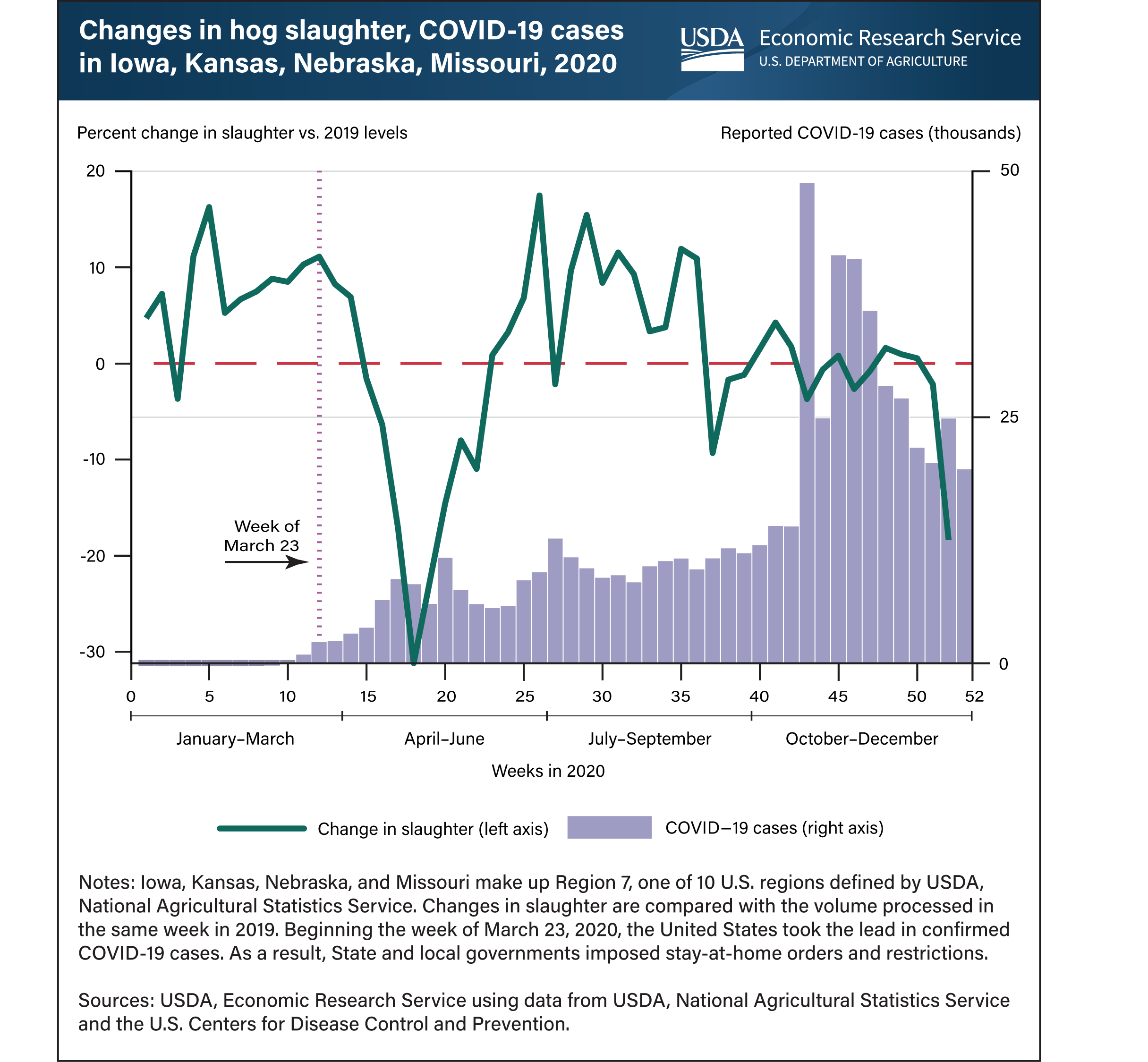
Iowa, Kansas, Missouri and Nebraska combine to process more than 40% of all hogs in the country. In these states, between March and May 2020, the rate of slaughtering dropped 40% compared to that time period in 2019, according to a new U.S. Department of Agriculture analysis.
But, by summer 2020, production had rebounded. By the end of that year, overall production in those four states was 2% higher than the previous year, which had no major disruptions.
* While Region 2 saw the greatest decrease in pork production, overall this area processes far fewer hogs than the other regions and so likely had a minimal impact on the nation's pork supply, according to the USDA.
To be sure, companies producing more pork is a trend: Nationally, pork production has increased every year but one since 2010, according to USDA figures. But other years didn't have the large-scale dips in production for weeks on end that COVID-19 produced.
[Read more: INFECTED, EXHAUSTED, DISTRESSED]
In December, USDA researchers found, during the pandemic's first few months, cases increased and production decreased. Then, production started to increase again, even as cases continued to mount, as the chart below shows.
[Read more: GRAPHIC: As industry pushed fears of meat shortage, exports increased]
The researchers attributed the rebounding production to more work performed on weekends; the steps plants took to protect workers, including more testing and providing PPE, that allowed them to keep clocking in; and the federal government making meat processing an essential industry, which allowed plants to remain open.
Top image: Danielle Pycior, for Investigate Midwest
